What It Means for the Food We Grow at Willow Haven Farm: What is Regenerative Farming?
If you’re trying to feed your family well today, food can feel surprisingly complicated.
You want vegetables that are fresh and nourishing. You want meat and dairy from animals raised on pasture. You want food that supports your family’s health instead of working against it.
But when most food travels long distances and is produced on a massive scale, it isn’t always easy to know how that food was produced.
That’s one reason many families in the Lehigh Valley keep turning back to local farms.
When you know your farmer, you can see the fields where your vegetables are grown and learn how cows, chickens, and pigs are managed on pasture.

Our farming is built on a simple idea: healthy soil produces healthier plants.
The word that best describes this approach is regenerative farming.
Regenerative farming focuses on rebuilding soil health and working with natural ecosystems to produce nourishing food.
It isn’t a single technique. It’s a way of farming that works with nature rather than against it.
It’s also the approach we’ve followed here since the beginning.
Willow Haven Farm began in 2009 when Reuben and I started growing food for our own family and a few neighbors who wanted to eat the same way. Over the years our small farm has grown into a place where hundreds of families across the Lehigh Valley now receive vegetables, meats, dairy, bread, and pantry staples from our farm and other local producers we trust.
From the beginning, our goal was simple: nourish people with real food. That meant farming in a way that supports the life of the soil and the health of the plants and animals that depend on it.
Many of the families who now buy food from our farm started in the same place. They were tired of produce that spoiled quickly, frustrated by confusing labels, and looking for a reliable way to bring truly fresh food into their homes each week.
In our very first year of farming, we saw firsthand how much the food we were growing mattered to the families receiving it. Reuben delivered our CSA boxes himself in those early days. Each week he pulled into driveways across the valley carrying a box of vegetables straight from the field to the front door. Over time he became a familiar face to many of the families we served.
One afternoon a stay-at-home mom met him at the door with a smile and said something we still remember today:
“My daughter loves your broccoli… even more than the peaches.”
For any parent who has tried to get a child to eat vegetables, that’s a remarkable statement.
Moments like that helped us understand that we weren’t simply growing crops. We were helping families bring real food into their homes week after week.
That’s why the way food is farmed matters so much. The methods used to grow food shape both the health of the land and the quality of the food that reaches your kitchen.
Farming That Builds the Land Instead of Depleting It
Modern industrial agriculture often treats soil like an empty medium—something that simply holds plants in place while fertilizers and chemicals are added from the outside.
Regenerative farming takes a different approach.
Instead of forcing crops to grow in depleted soil, regenerative farmers focus on restoring the living ecosystem beneath our feet.
Healthy soil is alive. It contains bacteria, fungi, earthworms, insects, organic matter, minerals, and countless microscopic organisms that support plant growth.
When soil is managed well, it holds nutrients more effectively, absorbs water like a sponge, and helps crops withstand drought and weather stress.
Plants grown in living soil are naturally stronger and more resilient.
Regenerative farming begins with this understanding: the health of the soil determines the health of the food that grows from it.
What Regenerative Farming Looks Like at Willow Haven Farm
Regenerative farming isn’t one specific practice. It’s a way of managing the land so the soil becomes healthier year after year.
On our farm, that means paying attention to the living systems that support plant and animal life.
Building Soil With Compost and Organic Matter
Healthy soil depends on organic matter.
Throughout the season we return nutrients to the land by adding compost and incorporating crop residues back into the soil. This feeds the underground community of organisms that support plant growth.
Over time the soil becomes darker, richer, and more biologically active. It holds moisture better and supports stronger plant growth.
Protecting the Soil With Cover Crops
Whenever a field isn’t producing vegetables, we plant cover crops.
These crops aren’t grown for harvest. Their purpose is to protect and rebuild the soil. Cover crops help prevent erosion, suppress weeds, capture nutrients, and add organic matter back into the ground.
Plants like clover, rye, and vetch keep the soil covered and alive during the months when food crops are not growing.
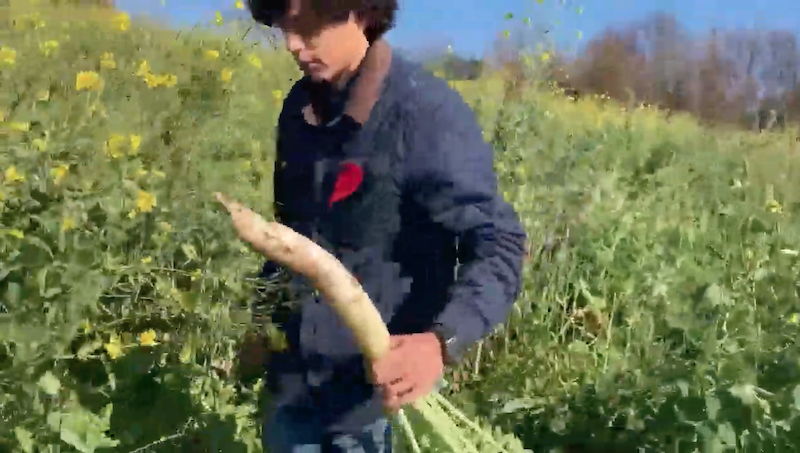
In some fields we even grow large daikon radishes as a cover crop. Their long roots push deep into the soil, breaking up compacted ground and helping bring nutrients closer to the surface for the crops that follow.
Crop Rotation to Maintain Balance
Growing the same crop in the same place every year creates problems for both soil and plants.
Instead, crops move through our fields in a planned rotation. A bed that grows tomatoes one year may grow leafy greens or root crops the next.
Rotation helps balance soil nutrients, reduce pest pressure, and keep the fields productive.
Natural Pest and Disease Management
Rather than relying on routine pesticide use, regenerative farms focus on prevention and balance.
Healthy soil helps plants grow stronger and more resilient. Crop diversity and rotation reduce pest pressure, while beneficial insects help keep pest populations in check.
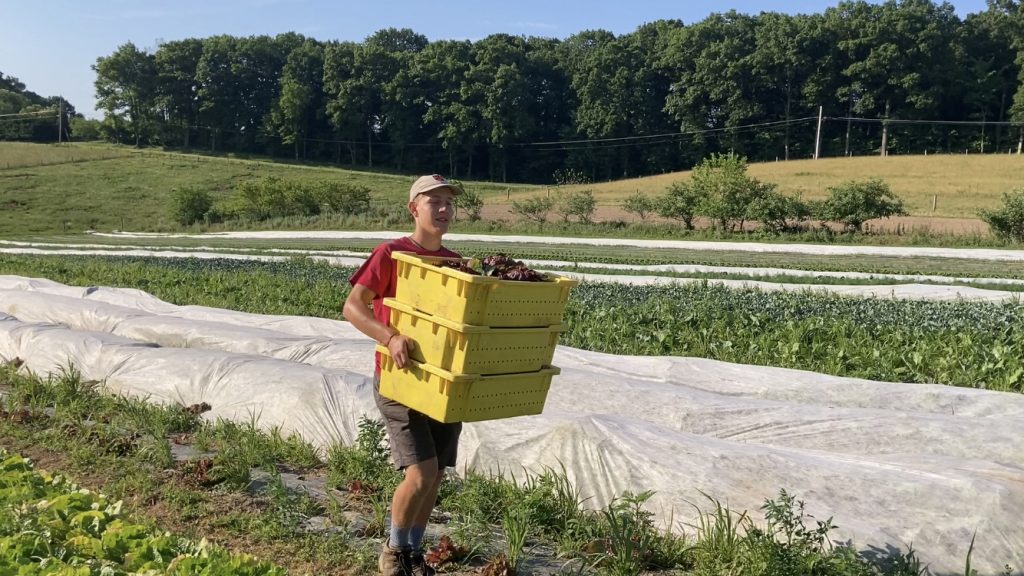
We also use physical protection when crops need it. In the spring you’ll often see our fields covered with long rows of white fabric gently waving in the breeze. These row covers protect young plants from insects while allowing sunlight, air, and rain to reach the crops.
The goal is not to eliminate nature from the farm, but to work within it.
Pastured Animals as Part of the Farm System
Animals are an important part of regenerative farming.
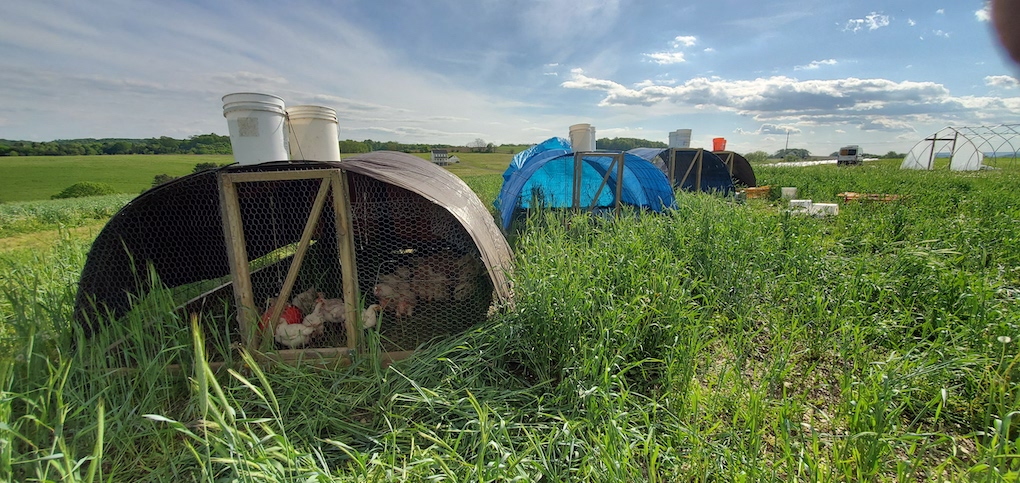
At Willow Haven Farm, our milk cows, pigs, and chickens all play a role in the health of the farm. They live outdoors on pasture where they can move, graze, and behave naturally.
Through rotational grazing, animals are regularly moved to fresh areas so grasses have time to recover and grow again. This pattern returns nutrients to the soil and strengthens the pasture over time.
When plants, soil, and animals are managed together this way, the entire farm becomes healthier and more productive.
Thoughtful Water Use
Healthy soil holds water more effectively than depleted soil.
Because regenerative farming focuses on building organic matter, our fields absorb rainfall more easily and retain moisture during dry periods.
We also use drip irrigation to deliver water directly to plant roots, allowing crops to receive what they need without wasting water.
The Result: Better Food From Healthier Soil
When soil building, crop rotation, pasture management, composting, and ecological balance all work together, the result is food produced from living, healthy soil.
Vegetables raised in healthy soil often have deeper flavor, better nutritional density, and longer freshness after harvest.
But perhaps even more important, they come from a farming system designed to improve the land rather than exhaust it.
Why Regenerative Farming Matters for Your Family
The choices farmers make directly affect the food that ends up on your table.
When you support farms practicing regenerative agriculture, you help rebuild soil health, protect pollinators and wildlife, strengthen local food systems, and preserve farmland for future generations — keeping productive land in farming instead of losing it to development, warehouses, and data centers.
You are also choosing food that travels a much shorter distance from field to kitchen.
Vegetables harvested locally and delivered soon after picking simply taste different than produce that has traveled across the country.
A Commitment That Has Guided Our Farm Since the Beginning
When we started Willow Haven Farm in 2009, our goal was simple: nourish people with real food.
We wanted to grow food in a way we would feel confident feeding to our own family. That commitment shaped every decision we made on the farm.
From the way we build soil to the way we raise milk cows, pigs, and chickens on pasture, our focus has always been on producing clean, nourishing food for the families who depend on it.
The terminology used in agriculture may change over time, but our commitment to the land and to the people we feed remains the same.
See What’s Available From the Farm
If you would like to experience the difference that regeneratively grown food can make in your kitchen, the easiest way to start is through our online farm market.
Each week you can choose from:
- fresh vegetables grown here on the farm
- seasonal fruit from trusted growers
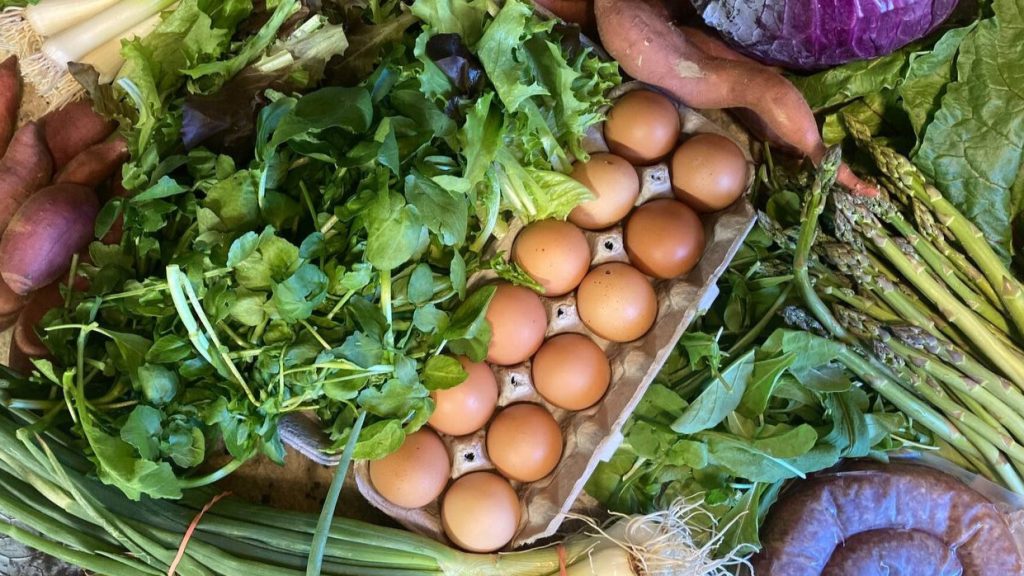
- pastured meats and eggs
- grass-fed dairy
- brick-oven breads and baked goods
- carefully selected pantry staples
You can customize your order each week and choose delivery or pickup locations throughout the Lehigh Valley.
Explore what’s available this week and bring food from your local farm into your kitchen.
If you’re new to buying from the farm, the “New Start Here” section will guide you to the best first items to try.
🌱 Browse the Online Farm Market
Questions About How Your Food Is Grown?
One of the benefits of buying food from a local farm is that you can always ask questions.
If you’re curious about how something is grown, how animals are raised, or how our farm operates, we’re always happy to talk.
Stop by the farm, send us a message, or ask the next time you see us.
We believe knowing your farmer should be a normal part of knowing your food.
We support your desire to build a healthy way of life and to place food on your table that truly supports that goal.
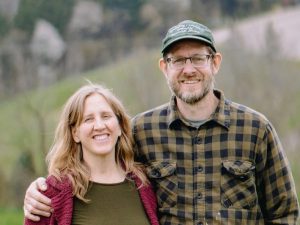
Reuben and Tessa DeMaster
Willow Haven Farm
P.S. If you’d like to taste the difference that regeneratively grown food makes, here are a few places to start.
Bring Real Food from the Farm into Your Kitchen
Discover nutrient-dense local food from farms that contribute to your health. Shop our online market for grass-fed meats, seasonal vegetables, wild-caught seafood, and the real-food kitchen staples your family deserves.